Secure Checkout
  • VisaVISA
  • Mastercard
  • American ExpressAMERICANEXPRESS
  • Apple PayPay
  • Google PayGPay
  • Afterpayafterpay
  • KlarnaKlarna.
Duties Paid
United StatesCanadaAustraliaNew ZealandSingaporeUnited Arab EmiratesHong KongSouth KoreaThailand
Lab-Verified 99.991%90-Day Refund
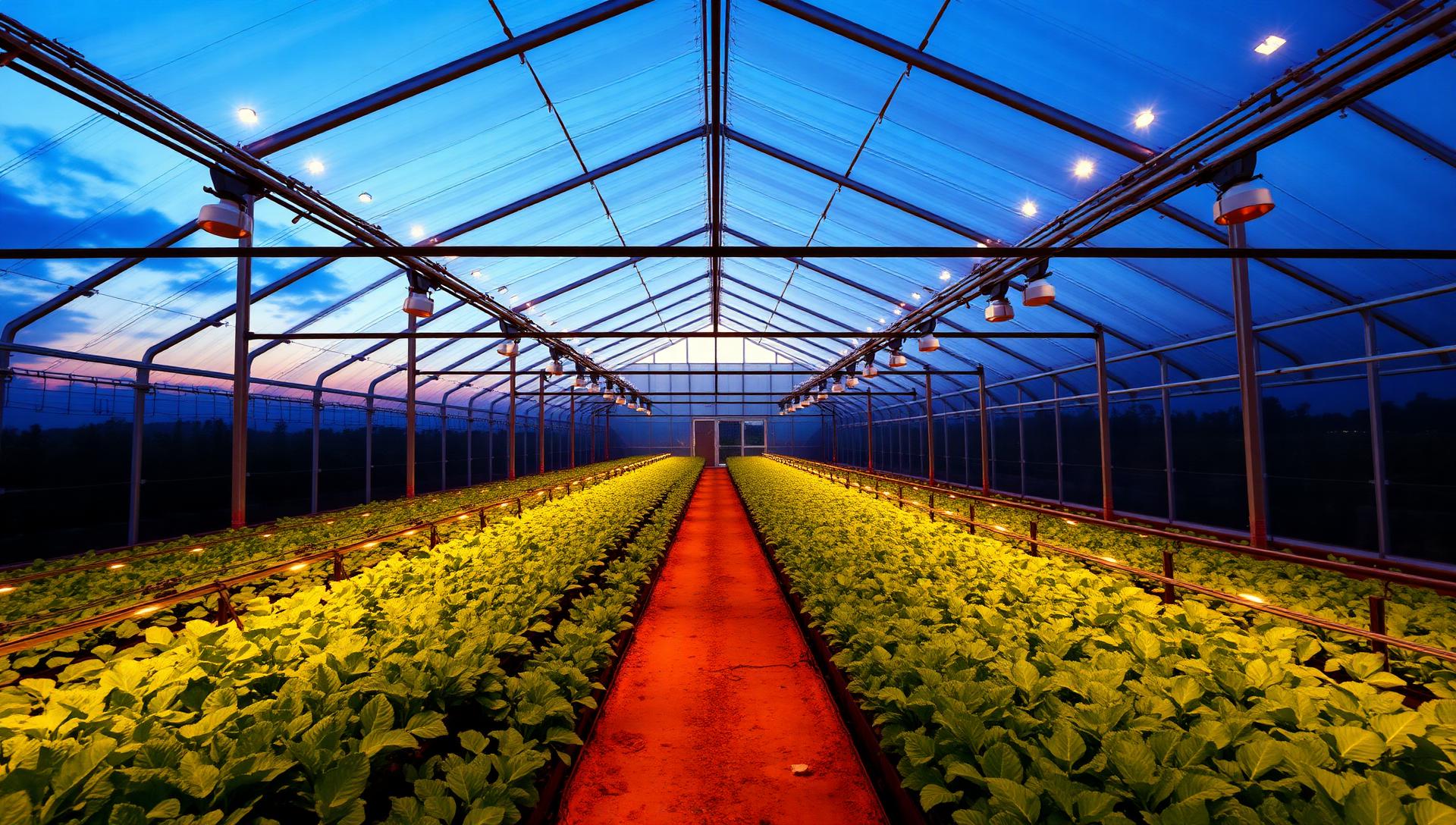
Commercial glasshouse at twilight — long glazed growing bays lit from within against a deep blue evening sky

Complete Glasshouse Solutions

Hydrogen for every stage of glasshouse operation

The only supplier engineering both the energy and the agriculture side of your greenhouse — combustion enhancement for climate control, hydrogen-rich water for irrigation, from one team.

Energy and agriculture, engineered from the same electrolysis foundation.

Quick answer

Hydrogen is used in glasshouses in two distinct ways. On the energy side, oxyhydrogen is injected into the boiler burner air stream to improve combustion efficiency for climate control, with a supplier-estimated 6–10% gas saving. On the agriculture side, molecular hydrogen is dissolved into irrigation water as nano-bubbles to support root-zone plant performance. Hydrogen Machines (YBG Group International) engineers both from the same electrolysis foundation, so one team specifies, commissions and services the boiler-side and irrigation-side systems.

Two problems, one technical foundation

Glasshouse-style environments are structurally unusual. They run an energy plant and a crop production system inside the same building envelope: steam or hot-water boilers hold temperature and humidity through the night and the cold season, while irrigation water carries nutrition to the root zone every day of the season.

Almost every supplier addresses one side only. Boiler and combustion specialists rarely understand root-zone chemistry; irrigation and fertigation vendors rarely touch the energy plant. Growers end up stitching together two unrelated vendors, two commissioning schedules and two sets of assumptions about the same site.

YBG Group works from a single technical foundation — hydrogen electrolysis — and engineers both. Oxyhydrogen injection on the combustion side; dissolved molecular hydrogen on the irrigation side. Same science, same engineers, one deployment.

Energy and agriculture

Energy

Combustion enhancement for climate control

Steam and hot-water boilers are the backbone of glasshouse climate control, and the single largest line on most growers' energy bill. Our Glasshouse Boiler Oxyhydrogen Generator injects oxyhydrogen into the burner air stream to improve combustion efficiency, with a supplier-estimated 6–10% gas saving. That figure is an engineering estimate, pending third-party validation — not a guaranteed result.

Glasshouse Boiler Oxyhydrogen Generator →

Agriculture

Hydrogen-rich water for irrigation

Field and academic research on hydrogen-rich irrigation reports yield improvements across several crop programmes. The strongest evidence: a six-year rice programme at Qingpu, near Shanghai, recorded an average 18.8% yield increase with reduced lodging and disease incidence; a peer-reviewed two-year cherry tomato trial in South Korea found significantly higher yield and single-fruit weight than conventional-fertiliser controls. Results are crop-, concentration- and site-dependent, and any commercial deployment should be validated on your own site.

HERO Irrigation Nano-bubble System →

Research background: hydrogen-rich water for greenhouse irrigation — what the studies report →

For enterprise-scale glasshouse operations

Design-authority and technical partnership track

Multi-site and large-hectare operations are handled as engineering engagements rather than direct equipment purchases — site survey, hydrogen dosing design, integration with existing fertigation and boiler plant, and staged validation. That work sits with YBG Industrial.

Enterprise greenhouse irrigation at ybgindustrial.com →

Why one supplier matters

Shared technical foundation

Combustion enhancement and hydrogen-rich water are both electrolysis problems. The same engineers specify the stack, the gas handling and the dosing — no translation loss between two disciplines.

Coordinated deployment

Boiler-side and irrigation-side works are scheduled against one commissioning plan, sized to one site survey, and brought online without two vendors waiting on each other.

Single point of contact

One team accountable for specification, installation support, service intervals and documentation — instead of two suppliers each pointing at the other when a result needs explaining.

Case study

Placeholder — content pending

A detailed glasshouse case study is in progress — check back soon.

Glasshouse hydrogen questions

How is hydrogen used in a commercial glasshouse?
In two separate systems. Oxyhydrogen is injected into boiler combustion air to improve burner efficiency for heating and climate control, and molecular hydrogen is dissolved into irrigation water to enrich the root zone. They share an electrolysis foundation but are different machines serving different parts of the operation.
What is oxyhydrogen combustion enhancement for glasshouse boilers?
An electrolyser produces an oxyhydrogen gas stream that is introduced into the burner air intake of an existing steam or hot-water boiler. The intent is a faster, more complete burn of the primary fuel. Our supplier estimate is a 6–10% gas saving; that figure is an engineering estimate pending third-party validation and is not a guaranteed result.
Does the boiler system replace our existing plant?
No. It is a retrofit that works alongside the existing boiler and burner. The primary fuel supply, controls and safety systems remain in place; the oxyhydrogen generator is added to the air stream and sized to the plant during the site survey.
What is hydrogen-rich irrigation water?
Irrigation water that has molecular hydrogen (H₂) dissolved into it, typically as nano-bubbles, before it reaches the root zone. It is dissolved hydrogen gas in water — chemically different from the oxyhydrogen used on the combustion side, and the two systems are never interchanged.
What evidence exists for hydrogen-rich irrigation?
A six-year rice programme at Qingpu near Shanghai recorded an average 18.8% yield increase with reduced lodging and disease incidence, and a peer-reviewed two-year cherry tomato trial in South Korea reported significantly higher yield and single-fruit weight than conventional-fertiliser controls. Results are crop-, cultivar-, concentration- and site-dependent and should be validated on your own site.
Which crops is hydrogen-rich irrigation suited to?
Reported programmes cover row crops such as rice as well as protected-cropping lines such as cherry tomato. Because response varies by crop, cultivar and dosing concentration, we scope a staged validation on a defined block before any full-site rollout.
Can one supplier handle both the boiler and the irrigation side?
Yes — that is the reason this hub exists. Both systems are specified by the same engineering team against a single site survey and one commissioning plan, so growers avoid two unrelated vendors and two sets of assumptions about the same site.
How are large or multi-site glasshouse operations handled?
Enterprise-scale operations are run as engineering engagements rather than equipment purchases: site survey, hydrogen dosing design, integration with existing fertigation and boiler plant, and staged validation. That work is delivered by YBG Industrial.
Where does Hydrogen Machines deliver glasshouse systems?
Australia and the United States are served directly, with enterprise engagements handled internationally through YBG Industrial. Specification starts with your glazed area, boiler capacity and irrigation flow rate.

Talk to our glasshouse team

Tell us your glazed area, boiler capacity and irrigation flow, and we'll come back with a specification for both sides of the operation.

Talk to our glasshouse team

Nanobubble technology context

Hydrogen Nano-bubble Technology in Irrigation & Water Treatment

Nanobubbles are gas bubbles below roughly 200 nanometres in diameter. Because they are far smaller than the bubbles produced by a conventional aerator or venturi, they do not rise and burst at the surface: they disperse through the water column and stay in suspension for far longer, which is what growers mean by nano-bubble stability, nano-bubble retention and low nano-bubble lift. A nanobubble generator is simply the device that produces that dispersion, usually as inline nano-bubble injection on the pressurised side of a pump.

Most nanobubble equipment in horticulture dissolves oxygen or air, and some water-remediation equipment dissolves ozone. Oxygen and air nanobubbles are used for water oxygenation and root-zone oxygenation — raising dissolved oxygen in irrigation water, hydroponic nutrient solution and aquaculture ponds. Ozone nanobubbles are used for oxidative water remediation and line hygiene. All three are oxidative or neutral gases: they change the oxygen status of the water, and the accepted mechanism is gas transfer, not redox signalling.

Hydrogen nano-bubbles are the advanced modality in the same delivery format. The HERO Irrigation system uses on-site PEM/SPE electrolysis to infuse 99.99%-purity molecular hydrogen as nano-bubbles directly into the irrigation line immediately before the dripper — pump-inline dosing, no chemical inputs, no storage cylinders, and no change to the existing pipework. Molecular hydrogen is a small, neutral, highly diffusive molecule, so nano-bubble dispersion carries it through the emitter and into the root zone rather than releasing it at the surface. Where oxygen nano-bubbles act on the dissolved-oxygen budget, hydrogen acts as a selective reducing species in the water and the root zone — a different mechanism, and the reason hydrogen nano-bubble infusion is treated as the higher-specification option for irrigation, controlled-environment agriculture, turf, nurseries and vineyards. The two are compatible: hydrogen infusion does not displace an existing dissolved-oxygen programme.

Evidence framing, stated plainly. Strongest: the physical chemistry of nano-bubble formation, stability and dispersion, and the measurable hydrogen concentration delivered at the emitter (3,000–5,000 ppb on this system). Moderate: published plant-science work on hydrogen-rich water and root-zone redox behaviour, most of it small-scale or glasshouse-scale. Gaps: long-run, multi-season, crop-specific yield data across soil types and water chemistries is still limited, and site conditions vary. We publish the mechanism and the delivered concentration; we do not publish crop-performance guarantees.

Nanobubble questions

What are nanobubbles in irrigation?

Nanobubbles are gas bubbles smaller than about 200 nanometres suspended in irrigation water. Unlike aeration bubbles they do not rise and burst, so they remain dispersed through the line and pass through drippers and emitters with the water rather than venting at the surface.

How do hydrogen nano-bubbles differ from oxygen nanobubbles?

Oxygen and air nanobubbles raise dissolved oxygen — a gas-transfer effect used for water oxygenation and root-zone oxygenation. Hydrogen nano-bubbles deliver molecular hydrogen, a small neutral molecule that behaves as a selective reducing species in water. The delivery format is the same; the chemistry is not. Hydrogen infusion is complementary to, not a replacement for, a dissolved-oxygen programme.

What is the difference between micro-bubbles and nano-bubbles?

Micro-bubbles are measured in micrometres and still have enough buoyancy to rise and coalesce within minutes. Nano-bubbles are two to three orders of magnitude smaller, have negligible lift, and stay in suspension long enough to travel the length of an irrigation run.

Do nano-bubbles improve water infiltration?

Nano-bubble infusion changes the gas content and interfacial behaviour of the water rather than its bulk viscosity. Infiltration and wetting-front behaviour are reported in field and glasshouse work but depend heavily on soil type, water chemistry and irrigation scheduling, so we describe the mechanism rather than promising an infiltration figure.

Are nano-bubbles used in CEA and hydroponics?

Yes. Controlled-environment agriculture, hydroponics and vertical farming are the most common settings for nanobubble equipment, because the nutrient solution is recirculated and closely monitored. Hydrogen nano-bubble infusion is applied the same way: inline, on the pressurised side of the pump, ahead of the distribution manifold.

How stable are hydrogen nano-bubbles?

Nano-bubble stability is a function of size distribution and surface charge, not of the gas alone. Because the system infuses immediately before the emitter, retention time between injection and delivery is short by design, which is why the delivered concentration at the dripper (3,000–5,000 ppb) is the figure we specify rather than a shelf-life claim.

Can nano-bubbles be used in turf management?

Turf and golf irrigation is a standard nanobubble application, typically through the existing pressurised distribution system. Hydrogen nano-bubble injection integrates the same way, inline at the pump house, without changing sprinkler or valve hardware.

What is inline nano-bubble injection?

Inline nano-bubble injection means the generator sits within the irrigation line itself and infuses gas into the flowing water under pressure, rather than treating water in a holding tank. It is also described as pump-inline dosing, and it keeps the treated water travelling straight to the emitters.

How do nano-bubbles support root-zone conditions?

Because nano-bubbles remain dispersed rather than venting, gas reaches the root zone with the irrigation water instead of being lost in the line. Oxygen nano-bubbles act on root-zone oxygenation; hydrogen nano-bubbles introduce a reducing species into the same zone. Both are mechanisms of delivery — site response depends on crop, substrate and water chemistry.

Can nano-bubble systems be used for irrigation water treatment and remediation?

Nanobubble equipment is widely used in irrigation water treatment, aquaculture oxygenation and water remediation. The HERO Irrigation system is a hydrogen infusion device: it adds molecular hydrogen to the water and does not disinfect, filter or replace an existing water-treatment or filtration stage.

Informational content describing hardware and water-treatment mechanisms. Not agronomic advice, and no crop-performance or health claims are made.

Engineering and efficiency figures on this page describe hardware and manufacturing performance and are supplier estimates unless a third-party validation is stated. Agricultural research is summarised with its evidence strength indicated; results are crop-, cultivar-, concentration- and site-dependent and are not a guarantee of outcome in any specific operation.

Evidence‑Informed Engineering

HydrogenMachines™ systems are built using evidence‑informed engineering, natural materials, and transparent construction. Independent laboratory testing confirms gas purity and composition.