
Industrial Oxyhydrogen · Combustion Enhancement
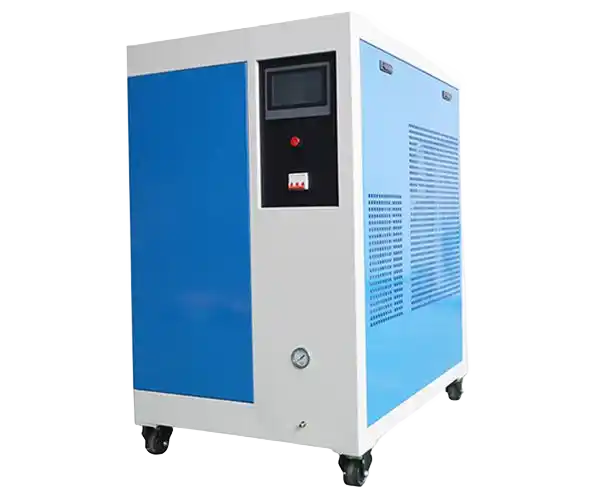
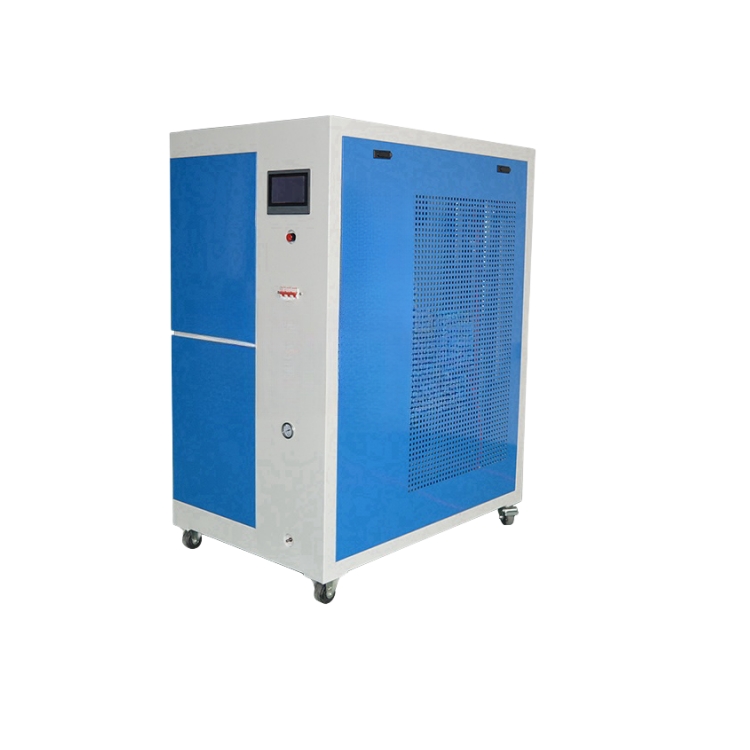
Glasshouse Boiler Oxyhydrogen Generator
Industrial oxyhydrogen (Brown’s Gas / HHO) generator engineered for glasshouse boiler combustion-enhancement applications. The system performs on-site electrolysis to produce stoichiometric oxyhydrogen (2:1 H₂/O₂), which is metered into the boiler’s combustion air manifold. The introduction of oxyhydrogen increases local flame speed, improves ignition stability, and enhances oxidation kinetics within the primary fuel combustion zone. This promotes more complete conversion of hydrocarbon combustion gases, reduces unburnt species, and stabilises flame propagation — all without modifying or replacing the existing boiler plant.

Applications
Boiler combustion enhancement
Oxyhydrogen is introduced into the boiler air intake to support more complete combustion of the primary fuel.
Glasshouse heating plant
Sized for the central heating plant that serves commercial glasshouse and greenhouse ranges.
Continuous on-demand output
Gas is produced on demand from water and electricity — no cylinders to order, store, or handle on site.
Retrofit to existing plant
Installs alongside existing boiler infrastructure; no replacement of the boiler itself.
Industrial-grade build
Steel cabinet, touchscreen control and integrated safety interlocks, built for continuous plant-room duty.
Part of a glasshouse solution set
Pairs with hydrogen-rich irrigation hardware for growers running both heating and irrigation programmes.
Selected for efficiency, not just output
Selected for efficiency, not just output. The Glasshouse Boiler Oxyhydrogen Generator uses the DY6000 platform — rated at 20 kW for 6,000 L/h of gas output, delivering more gas per kW consumed than larger units in the same range (10,000 L/h at 35 kW, 20,000 L/h at 70 kW). For fluctuating-demand boiler applications, this makes it the more power-efficient building block — including when paired in a modular multi-unit configuration to match peak demand, rather than stepping up to a single oversized unit that runs under-loaded most of the time.
Fuel savings estimate
Supplier engineers estimate a 6–10% comprehensive natural-gas saving on the boiler plant when oxyhydrogen is introduced into the combustion air. For biomass fueled boilers a benchmark saving of 10% is routine. The estimate is based on improving the steam-to-fuel ratio through three combustion mechanisms:
Faster flame speed
Reduces incomplete combustion and unburned fuel loss in the flame zone.
Lower excess-air requirement
Cuts flue-gas volume and the heat carried out of the stack.
Flame temperature homogenization
Distributes heat more evenly, reducing cold zones in the furnace.
Supplier-provided engineering estimate. This 6–10% figure for natural gas reflects estimates supplied by the equipment engineers and is pending independent third-party validation. It is not a guaranteed performance outcome and is presented here consistent with our standard of not making unverified technical claims.
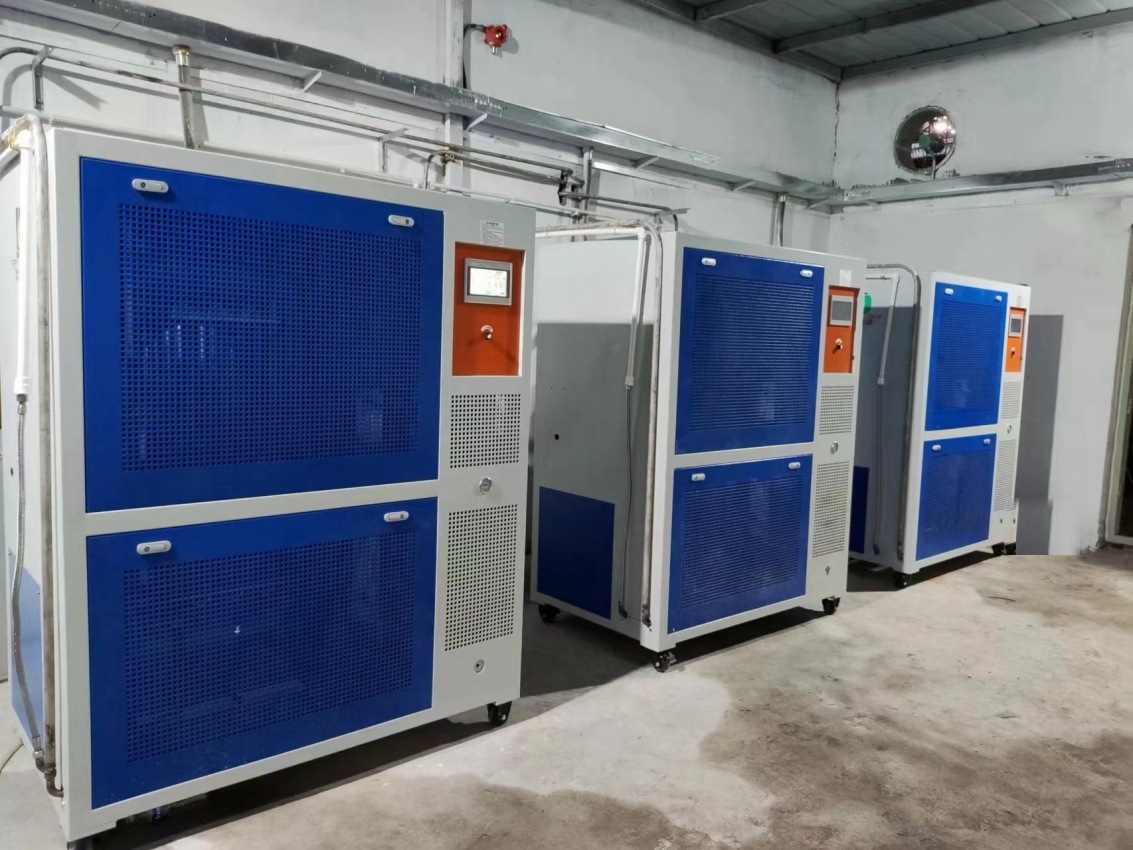
Reference installation: 800 BHP oxyhydrogen generator in parallel with a 10 TPH natural gas boiler
Field footage showing a similarly scaled industrial oxyhydrogen generator operating alongside a 10 TPH natural gas boiler. The unit is connected in parallel with the boiler combustion air intake — the same modular configuration used for the Glasshouse Boiler Oxyhydrogen Generator. See the case study section below for the actual reference footage.
Case study: two units in parallel on a 10 TPH natural gas boiler
The recommended configuration for higher-demand steam applications is to run two Glasshouse Boiler Oxyhydrogen Generator units in parallel, connected to the combustion air intake of a single 10 TPH natural gas steam boiler. The footage below shows a similarly scaled 800 BHP oxyhydrogen generator operating in parallel with a 10 TPH natural gas boiler — the same modular configuration used for the Glasshouse Boiler Oxyhydrogen Generator.
Performance
- Technology
- Alkaline electrolysis
- Gas output
- 6,000 L/h
- Rated power
- 20 kW
- Power input
- 380V
- Working pressure
- ≤0.2 MPa
- Water consumption
- 3.2 L/h
- Water quality required
- < 30 TDS
- Cooling
- Automatic
Physical
- Dimensions (H×W×D)
- 1350 × 850 × 1700 mm
- Weight
- 500 kg
Installation
Professional installation by a qualified electrician and boiler engineer is required. Connection is made to the boiler combustion air intake; exact placement and gas injection rate must be confirmed by the installing engineer for the specific boiler plant.
Water supply
Water purification equipment is available separately if required to meet the <30 TDS water quality specification.
Frequently asked questions
Oxyhydrogen, also called Brown's Gas or HHO — hydrogen and oxygen generated together by alkaline electrolysis of water at the natural 2:1 ratio, produced on demand at up to 6,000 L/h.
No. Gas is generated on demand and consumed immediately at the burner, so there is no cylinder storage or bulk gas inventory in the plant room.
The generator is connected in parallel with the boiler and injected into the combustion air intake. Placement and injection rate are set by the installing boiler engineer for the specific plant.
A 380 V supply rated for the unit's 20 kW draw, installed and certified by a qualified electrician.
Feed water below 30 TDS at approximately 3.2 L/h. Water purification equipment is available separately where site water does not meet that specification.
The boiler itself is not rebuilt. Connection is made at the combustion air intake, and the installing engineer confirms burner settings and gas injection rate for the plant.
Yes. Units are modular and can be installed in parallel to match larger boiler duties, as shown in the reference installation footage on this page.
Installation requires both a qualified electrician and a qualified boiler engineer. Commissioning includes leak testing, interlock verification and burner tuning under load.
Also part of a complete glasshouse solution
HERO Irrigation Hydrogen Nano-bubble System
While the Glasshouse Boiler Oxyhydrogen Generator works on the heating side of the glasshouse, the HERO Irrigation Hydrogen Nano-bubble System covers the irrigation side — 20 L/min of hydrogen-rich water at 3,000–5,000 ppb for drip irrigation across glasshouse ranges up to 10 hectares.
View the HERO Irrigation system →Shipping, Incoterms & HS Code
DDP Risk Warning
Delivered Duty Paid (DDP) is offered only in selected countries where the seller can legally act as the Importer of Record.
Many jurisdictions do not support DDP. In these regions, orders ship under DAP (Delivered At Place), meaning the customer must clear the goods through customs and pay import duties themselves.
Using DDP in restricted countries can result in customs delays, VAT liabilities, or refusal of entry.
HS Code: 8543.3000.90 — Electrical machines and apparatus having individual functions.
DDP-Eligible Countries
DDP is available only in the following destinations where foreign Importer-of-Record is permitted:
All Other Countries
Orders ship under DAP (Delivered At Place) due to Importer-of-Record restrictions, VAT registration requirements, or customs compliance constraints.
Industrial compliance note
Engineering-estimate qualification. Performance and fuel-savings figures shown on this page reflect supplier-provided engineering estimates and are not independently verified or guaranteed outcomes. Actual performance depends on site-specific conditions, boiler configuration, fuel quality, operating regime, and installation quality.
Installation & regulatory compliance. Installation must be carried out by qualified personnel in accordance with all applicable local regulations, codes, and standards. The customer and/or installing contractor is solely responsible for regulatory compliance and safe integration with existing boiler and burner systems. YBG Group International Pty Ltd and Hydrogen Machines supply equipment and provide technical guidance only; we do not perform installation certification or on-site compliance sign-off.