
A different literature to the rest of this site
Almost everything else on this site deals with hydrogen-rich water in a human wellness context. This page does not. Hydrogen-rich water (HRW) in plant and animal science is a distinct and growing peer-reviewed literature, with its own species, endpoints and measurement conventions — crop physiology and yield parameters on the plant side, and production and metabolic parameters on the livestock side. None of the human-health material elsewhere on this site should be read across to it, and none of the studies below should be read as saying anything about people.
The discipline applied here is the same one used across the group's technical content: cite specific studies, attribute each finding to the study that produced it, hedge accordingly, and never blend numbers from different papers into a single unattributed claim.
Crops and irrigation — hydroponic, greenhouse and open-field
This is deliberately broader than hydroponics. Several of the studies below used pot or field irrigation rather than a controlled hydroponic system, so the relevance extends to open-field and broadacre irrigation as well as to greenhouse and hydroponic production.
Hydrogen-rich water irrigation and fragrant rice seedlings under salt stress
Pot / irrigation trial in which HRW irrigation was associated with increased dry weight per unit seedling height in fragrant rice varieties grown under salt stress.
Hydrogen-rich water subsurface drip irrigation of greenhouse 'Flame Seedless' grapes
Greenhouse subsurface drip irrigation trial reporting changes in chlorophyll fluorescence parameters and antioxidant activity associated with HRW irrigation, and corresponding differences in fruit quality.
Hydrogen-rich water irrigation and cucumber fruit quality
Published research reporting increases in vitamin C content, soluble sucrose levels and fruit size in cucumber under HRW irrigation.
Hydrogen-rich water and seed germination in alfalfa and black radish
Published germination research examining the effect of hydrogen-rich water treatment on alfalfa and black radish seeds.
Molecular hydrogen and drought tolerance / stress response in plants
Published plant-physiology research associating hydrogen-rich water with drought-tolerance and abiotic stress-response effects in model and crop species, including Arabidopsis.
Read these as study-specific. Each result above belongs to a particular crop, cultivar, water chemistry, hydrogen concentration and growing environment. Published research reports these associations; it does not predict what will happen in your soil, your water, your climate or your system — whether hydroponic, greenhouse or open-field. Treat any application on your own property as something to trial and measure yourself, not as a projected result.
Stagnant water and dissolved oxygen — a separate mechanism
This point is mechanistically distinct from the hydrogen-concentration studies above and should not be merged with them. Low dissolved oxygen (DO) in non-circulating or standing water — a reservoir, a farm dam, a static irrigation store, an unaerated nutrient solution — is a well-documented problem in both hydroponics and open-field irrigation storage. The established literature ties low DO in the root zone to anoxia, reduced nutrient uptake, and conditions that favour pathogens such as Pythium (root rot).
Aeration and dissolved oxygen in a floating hydroponic system growing leafy vegetables
Floating hydroponic study in which aeration raised dissolved oxygen from 4.89 mg/L to 6.38 mg/L and was associated with an average 15% increase in fresh weight across the leafy vegetable species tested, with species-specific variation.
PEM electrolysis produces oxygen as a co-product alongside hydrogen, which is the mechanistic link to that aeration and DO literature. That link should not be overstated: the aeration study cited above used purpose-built aeration, and an electrolysis unit is not equivalent to a dedicated aerator or air-stone system. The honest framing is that the two share a mechanism of interest — dissolved gas in otherwise stagnant water — not that one substitutes for the other.
Note the deliberate absence of vitalist language here. Terms like "life" or "vigour" in water have no study behind them and fall outside the evidence-first standard applied to the group's technical writing.
Livestock drinking water
This is its own body of peer-reviewed research, separate from the crop work above, and it carries additional caution. Findings about diarrhoea incidence, survival, or milk and meat composition are animal-health and production-outcome claims. They are reported here strictly as what a specific study found under controlled research conditions.
Hydrogen-rich water (400 ppb) and in vitro rumen fermentation, microbial community and methane production
In vitro rumen fermentation study reporting that hydrogen-rich water at 400 ppb modulated rumen microbial community structure and reduced methane production without significantly affecting volatile fatty acid synthesis; discussed by the authors as a potential strategy for ruminant nutrition and methane mitigation.
Hydrogen-rich water consumption and the chemical composition and antioxidant properties of goat milk and colostrum
Published research reporting altered chemical composition and antioxidant properties of milk and colostrum in goats consuming hydrogen-rich water.
Hydrogen-rich water supplementation during the peripartum period in goats
Published research reporting an association between HRW supplementation and metabolic profile during the peripartum period, and kid survival, in the herd studied.
Hydrogen-rich water as drinking water and diarrhoea incidence in weaned piglets
Controlled study reporting reduced diarrhoea incidence in weaned piglets given hydrogen-rich water as drinking water, attributed by the authors to alleviation of oxidative stress.
Hydrogen-rich drinking water, antioxidant capacity and meat quality in broiler chickens
Published research reporting effects of hydrogen-rich drinking water on antioxidant capacity and meat quality parameters in broiler chickens.
Not veterinary or animal-health advice. Nothing in this section is a recommendation to alter animal management, feeding, watering or health practices, and nothing here should be read as a guarantee of an outcome in any herd or flock. Each finding belongs to its own study, its own species and breed, its own hydrogen concentration and its own controlled conditions. Animal health and welfare decisions belong with your veterinarian.
Aquaculture — covered on its own page
Hydrogen-rich water research also extends to aquaculture and fish-rearing water. Because that work has its own separate literature and cautions, it is covered on a dedicated page rather than here.
Read more: hydrogenated water for aquaculture →
Nothing in that research has been shown to extend to prawns, shrimp or other crustaceans, and nothing on either page is aquaculture-management advice.
How the water is hydrogenated
The mechanism common to this research and to our equipment is PEM (proton exchange membrane) electrolysis: an electric current splits water at a membrane, producing high-purity hydrogen at one electrode and oxygen at the other. How much of that hydrogen ends up dissolved rather than escaping at the surface depends on bubble size and circulation, which is why hydrogenation systems pair the electrolysis cell with a circulation loop and a dissolution stage.
Our HERO Bath Hydrogen Nano-bubble System — 5-Certification Spa Generator uses that mechanism, with a published water circulation rate of 3,750 ml/min and a dissolved H₂ concentration of >2,000 ppb.
What we are not claiming. HERO Bath is a closed-loop bathing system. Using its water for crop irrigation or as livestock drinking water is a different use pattern to its design purpose. We deliberately state no irrigation-scale or livestock-watering output volume, no method for drawing treated water off the unit, and no figure for how long dissolved hydrogen would hold after removal from the closed loop or across a watering-delivery period — none of that has been confirmed against the product specification. For confirmed figures, use the HERO Bath product page. This page is exploratory, informational content for agriculture-interested readers — not a representation that the product is purpose-built or validated for agricultural-scale irrigation or livestock watering.
Nanobubble technology context
Hydrogen Nano-bubble Technology in Irrigation & Water Treatment
Nanobubbles are gas bubbles below roughly 200 nanometres in diameter. Because they are far smaller than the bubbles produced by a conventional aerator or venturi, they do not rise and burst at the surface: they disperse through the water column and stay in suspension for far longer, which is what growers mean by nano-bubble stability, nano-bubble retention and low nano-bubble lift. A nanobubble generator is simply the device that produces that dispersion, usually as inline nano-bubble injection on the pressurised side of a pump.
Most nanobubble equipment in horticulture dissolves oxygen or air, and some water-remediation equipment dissolves ozone. Oxygen and air nanobubbles are used for water oxygenation and root-zone oxygenation — raising dissolved oxygen in irrigation water, hydroponic nutrient solution and aquaculture ponds. Ozone nanobubbles are used for oxidative water remediation and line hygiene. All three are oxidative or neutral gases: they change the oxygen status of the water, and the accepted mechanism is gas transfer, not redox signalling.
Hydrogen nano-bubbles are the advanced modality in the same delivery format. The HERO Irrigation system uses on-site PEM/SPE electrolysis to infuse 99.99%-purity molecular hydrogen as nano-bubbles directly into the irrigation line immediately before the dripper — pump-inline dosing, no chemical inputs, no storage cylinders, and no change to the existing pipework. Molecular hydrogen is a small, neutral, highly diffusive molecule, so nano-bubble dispersion carries it through the emitter and into the root zone rather than releasing it at the surface. Where oxygen nano-bubbles act on the dissolved-oxygen budget, hydrogen acts as a selective reducing species in the water and the root zone — a different mechanism, and the reason hydrogen nano-bubble infusion is treated as the higher-specification option for irrigation, controlled-environment agriculture, turf, nurseries and vineyards. The two are compatible: hydrogen infusion does not displace an existing dissolved-oxygen programme.
Evidence framing, stated plainly. Strongest: the physical chemistry of nano-bubble formation, stability and dispersion, and the measurable hydrogen concentration delivered at the emitter (3,000–5,000 ppb on this system). Moderate: published plant-science work on hydrogen-rich water and root-zone redox behaviour, most of it small-scale or glasshouse-scale. Gaps: long-run, multi-season, crop-specific yield data across soil types and water chemistries is still limited, and site conditions vary. We publish the mechanism and the delivered concentration; we do not publish crop-performance guarantees.
Nanobubble questions
What are nanobubbles in irrigation?
Nanobubbles are gas bubbles smaller than about 200 nanometres suspended in irrigation water. Unlike aeration bubbles they do not rise and burst, so they remain dispersed through the line and pass through drippers and emitters with the water rather than venting at the surface.
How do hydrogen nano-bubbles differ from oxygen nanobubbles?
Oxygen and air nanobubbles raise dissolved oxygen — a gas-transfer effect used for water oxygenation and root-zone oxygenation. Hydrogen nano-bubbles deliver molecular hydrogen, a small neutral molecule that behaves as a selective reducing species in water. The delivery format is the same; the chemistry is not. Hydrogen infusion is complementary to, not a replacement for, a dissolved-oxygen programme.
What is the difference between micro-bubbles and nano-bubbles?
Micro-bubbles are measured in micrometres and still have enough buoyancy to rise and coalesce within minutes. Nano-bubbles are two to three orders of magnitude smaller, have negligible lift, and stay in suspension long enough to travel the length of an irrigation run.
Do nano-bubbles improve water infiltration?
Nano-bubble infusion changes the gas content and interfacial behaviour of the water rather than its bulk viscosity. Infiltration and wetting-front behaviour are reported in field and glasshouse work but depend heavily on soil type, water chemistry and irrigation scheduling, so we describe the mechanism rather than promising an infiltration figure.
Are nano-bubbles used in CEA and hydroponics?
Yes. Controlled-environment agriculture, hydroponics and vertical farming are the most common settings for nanobubble equipment, because the nutrient solution is recirculated and closely monitored. Hydrogen nano-bubble infusion is applied the same way: inline, on the pressurised side of the pump, ahead of the distribution manifold.
How stable are hydrogen nano-bubbles?
Nano-bubble stability is a function of size distribution and surface charge, not of the gas alone. Because the system infuses immediately before the emitter, retention time between injection and delivery is short by design, which is why the delivered concentration at the dripper (3,000–5,000 ppb) is the figure we specify rather than a shelf-life claim.
Can nano-bubbles be used in turf management?
Turf and golf irrigation is a standard nanobubble application, typically through the existing pressurised distribution system. Hydrogen nano-bubble injection integrates the same way, inline at the pump house, without changing sprinkler or valve hardware.
What is inline nano-bubble injection?
Inline nano-bubble injection means the generator sits within the irrigation line itself and infuses gas into the flowing water under pressure, rather than treating water in a holding tank. It is also described as pump-inline dosing, and it keeps the treated water travelling straight to the emitters.
How do nano-bubbles support root-zone conditions?
Because nano-bubbles remain dispersed rather than venting, gas reaches the root zone with the irrigation water instead of being lost in the line. Oxygen nano-bubbles act on root-zone oxygenation; hydrogen nano-bubbles introduce a reducing species into the same zone. Both are mechanisms of delivery — site response depends on crop, substrate and water chemistry.
Can nano-bubble systems be used for irrigation water treatment and remediation?
Nanobubble equipment is widely used in irrigation water treatment, aquaculture oxygenation and water remediation. The HERO Irrigation system is a hydrogen infusion device: it adds molecular hydrogen to the water and does not disinfect, filter or replace an existing water-treatment or filtration stage.
Informational content describing hardware and water-treatment mechanisms. Not agronomic advice, and no crop-performance or health claims are made.
Recommended system
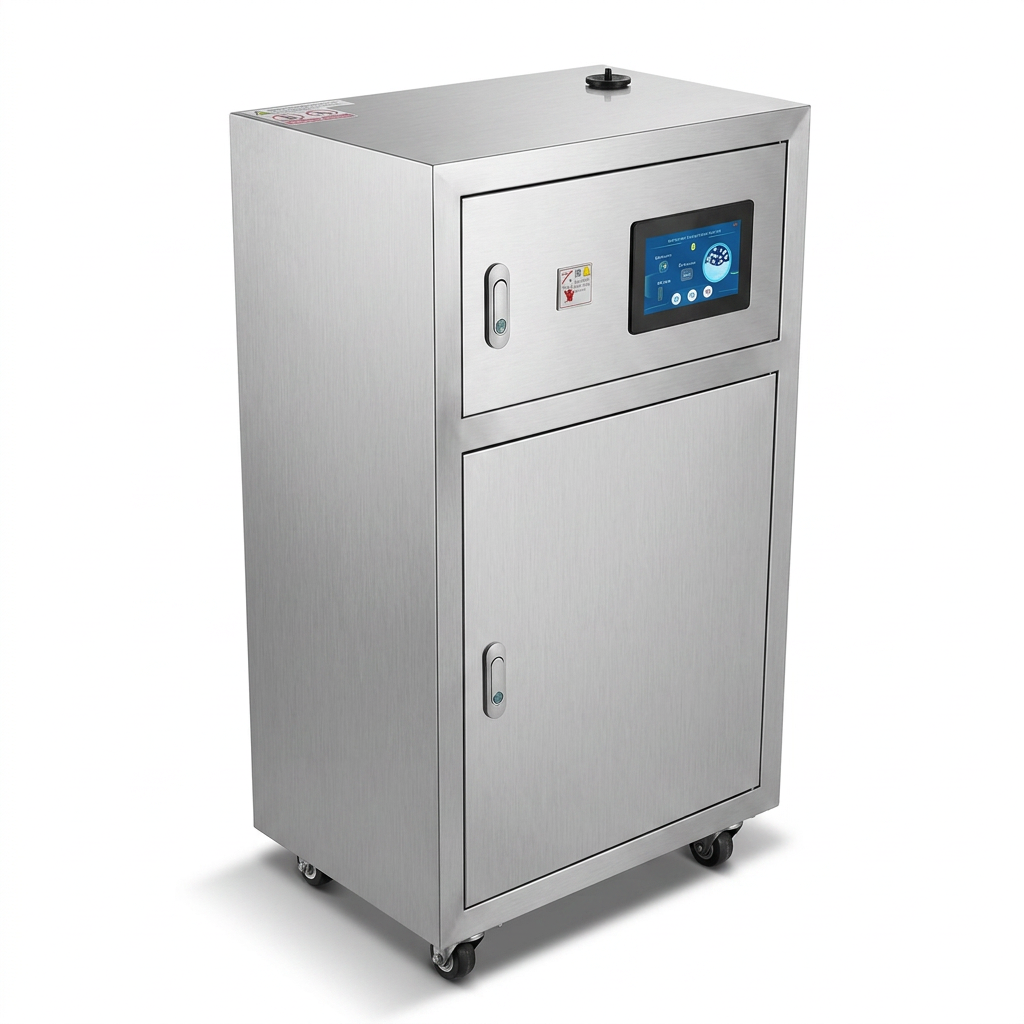
HERO Irrigation Hydrogen Nano-bubble System
On-site PEM/SPE electrolysis dissolves 99.99%-purity molecular hydrogen into your existing irrigation line as nano-bubbles, immediately before the dripper.
- 20 L/min
- Hydrogen nano-bubble density 3,000–5,000 ppb
- PEM/SPE nano-bubble
- Up to 10 hectares
- Nano-bubble infusion
- Inline nano-bubble injection
- Root-zone nano-bubble delivery
- Water activation process