
HERO Bath · SPE/PEM Bath Generator
Hydrogen Bath Generator — Engineered SPE/PEM System
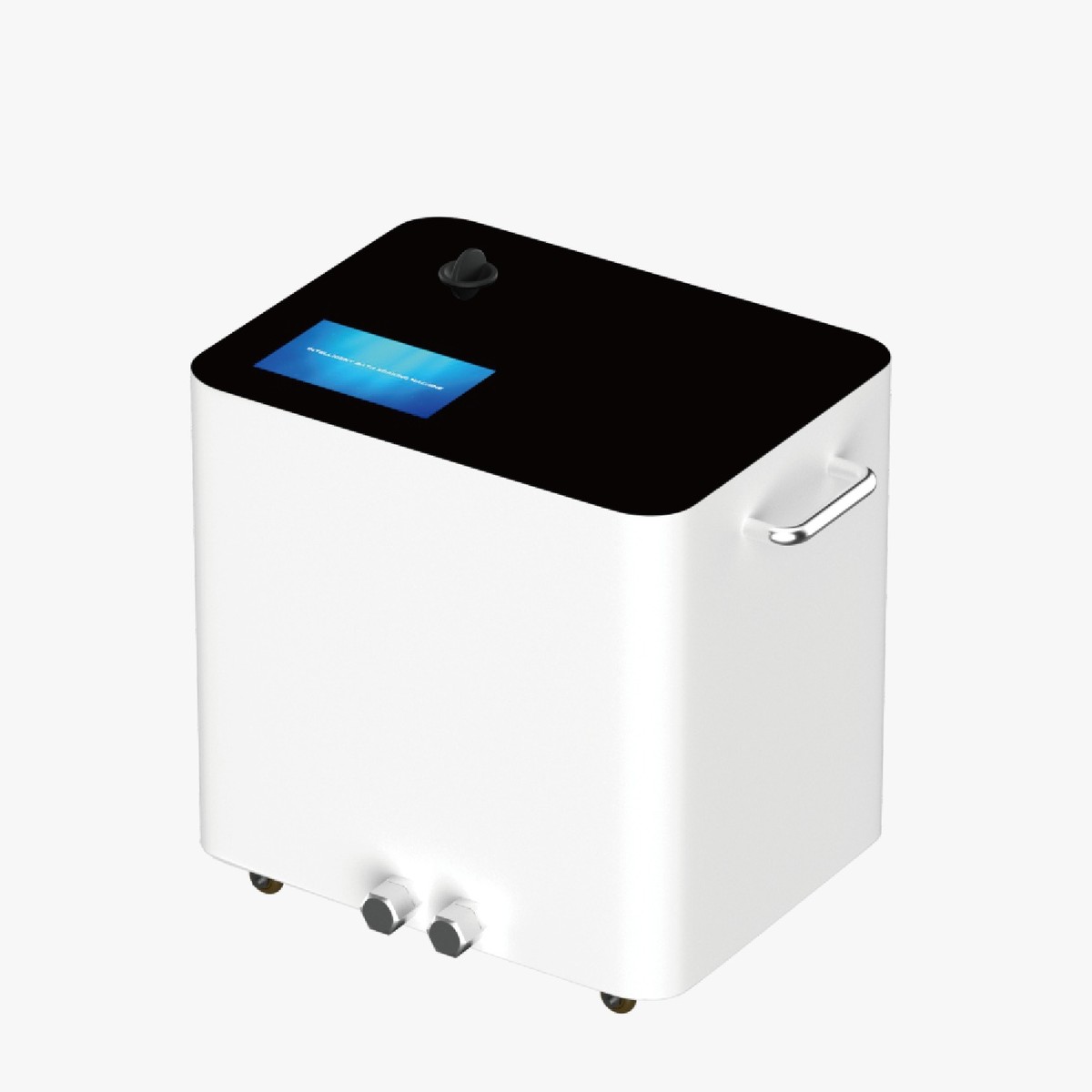
The HERO Bath is a dedicated hydrogen bath generator built around an SPE/PEM electrolysis stack. It delivers a stable, measurable dissolved H₂ concentration into the bath — not a novelty additive, not a peak-and-decay tablet reaction.



CE marked · FCC Part 15 Subpart B (independent-laboratory tested) · ISO 13485 & ISO 9001 manufacturing.
What is a hydrogen bath generator?
A hydrogen bath generator is an appliance that produces molecular hydrogen (H₂) from water by electrolysis and disperses it into a bath as either nanobubbles or hydrogen-rich water. Unlike hydrogen bath tablets — which dissolve into a fixed dose accompanied by fillers such as magnesium or citric acid — a generator produces H₂ on demand at a controllable flow rate, for the full duration of the session, with no consumables and no additional chemistry entering the water.
How SPE/PEM electrolysis works
An SPE/PEM (Solid Polymer Electrolyte / Proton Exchange Membrane) electrode stack splits purified water at the anode. Protons migrate through an ion-exchange membrane to the cathode, where they recombine as molecular H₂ with model-specific gas composition. Oxygen produced at the anode is separated and vented. No salts, no chlorine, no ozone byproducts — because there is no chemical electrolyte in the water path, only the membrane itself.
The gas is then dispersed into bath water as nanobubbles — sub-micron bubbles whose small diameter increases surface area and slows buoyant rise, which is what allows measurable dissolved H₂ concentration to build in an open bath rather than immediately outgassing.
Flow rate and dissolved H₂ concentration
Two variables determine how much hydrogen a bath actually holds, and most buyers are never shown either of them:
- Flow rate (L/min or ml/min) — how fast the machine delivers H₂ or hydrogenated water into the tub. Determines time-to-saturation across a full bath volume.
- Dissolved H₂ concentration (ppm or ppb) — how much hydrogen is actually in the water at the point of delivery. A spec sheet that quotes gas output without dissolved concentration is describing the machine, not the bath.
Quality hydrogen bath systems are a serious purchase category, and pricing varies widely based on electrode surface area, membrane quality, and gas output — not just brand. Two generators at very different price points can produce very different dissolved concentrations, and the only way to know is to ask for both numbers together.
| Variable | Why it matters | HERO Bath |
|---|---|---|
| Dissolved H₂ | Actual concentration in bath water at delivery | 2,000–3,000 ppb (manufacturer-stated) |
| Flow rate | Time-to-saturation across bath volume | 6 L/min |
| H₂ purity | Output composition, no contaminants | model-specific measurements |
HERO Bath specification sheet
Manufacturer-published specifications. Contact us for the full technical datasheet.
| Electrolysis method | SPE/PEM (Solid Polymer Electrolyte / Proton Exchange Membrane) |
| Flow rate | 6 L/min hydrogenated water delivered into bath |
| Max dissolved H₂ | 2,000–3,000 ppb (manufacturer-stated) (2.0 ppm) at point of delivery |
| Electrode material | Titanium substrate with platinum-group catalyst coating |
| Membrane type | Proton exchange membrane (perfluorosulfonic acid) |
| Tank capacity | 3 L (distilled water recommended, TDS < 30) |
| Session duration | Timer controlled — see manual for recommended cycle |
| Power / voltage | 100–240 V · 50/60 Hz (worldwide) |
| Certifications | CE · FCC Part 15 Subpart B · RoHS · ISO 9001 · ISO 13485 |
| Warranty | 2-Year Warranty |
| Weight / dimensions | 17 kg · 340 × 265 × 380 mm |
| Format | Portable benchtop — no plumbing required |
| Price | US$5,247 |
Why the price is what it is
Cost in this category is driven by componentry, not branding. Four factors determine what a hydrogen bath generator actually costs to build:
- Electrode surface area & material — platinum-group catalyst on titanium substrate determines gas output rate and stack longevity.
- Membrane grade — perfluorosulfonic acid PEM material determines proton conductivity, purity and durability across duty cycles.
- Gas output rate — higher stable flow requires larger stacks, higher-spec power electronics, and better water management.
- Build quality & certifications — CE, FCC Part 15B and ISO 13485-aligned manufacturing add real cost that generic import products don't carry.
At US$5,247, the HERO Bath sits below the top of the category on price but matches or exceeds it on the componentry that actually determines dissolved H₂ delivery. It's engineered value — the same core SPE/PEM principles as premium systems, priced for what's inside the chassis rather than what's on the label.
Compliance & manufacturing
CE Mark
European conformity for electrical safety and product compliance.
FCC Part 15 Subpart B
US electromagnetic compliance — independent-laboratory tested in an accredited anechoic chamber, not self-declared. Certificate LST250598095F.
ISO 13485 & ISO 9001
Manufactured in facilities operating under ISO 13485 (medical-device-adjacent quality system) and ISO 9001 quality management frameworks.
These certifications describe hardware and manufacturing — electrical safety, electromagnetic compliance, and quality-system rigour. They indicate a manufacturer built for regulated medical-adjacent device production, not a generic import product. They do not describe medical or therapeutic status; the HERO Bath is a general wellness appliance.
Frequently asked questions
What is a hydrogen bath generator?
A hydrogen bath generator is an appliance that produces molecular hydrogen (H₂) from water via SPE/PEM electrolysis and delivers it into a bath — either as hydrogen-rich water or as nanobubble gas dispersion. Unlike hydrogen bath tablets, it produces H₂ on demand at a controllable flow rate and dissolved concentration, without introducing additional chemistry into the water.
How is a hydrogen bath generator different from hydrogen bath tablets?
A generator produces H₂ electrolytically at a stable rate for the full session — dissolved concentration is held while the machine runs. Tablets dissolve on a peak-and-decay curve, so ppm rises briefly and then falls, and they typically include magnesium, citric acid, or other fillers alongside the hydrogen-generating reaction. A generator is a one-time capital purchase with no consumables; tablets are an ongoing per-session cost.
What dissolved hydrogen concentration (ppm) should I look for in a hydrogen bath?
Look at two numbers together: dissolved H₂ concentration at the point of delivery, and flow rate into the tub. A high ppm figure on a low flow rate saturates a small volume of water quickly but takes a long time to lift a full bath. The HERO Bath delivers 2,000–3,000 ppb (manufacturer-stated) (2.0 ppm) at 6 L/min into the bath.
Is the HERO Bath hydrogen bath generator safe and compliant?
The HERO Bath carries CE marking, FCC Part 15 Subpart B (independent-laboratory tested electromagnetic compliance), RoHS, ISO 9001 and ISO 13485 manufacturing certifications. Documentation is published at hydrogenmachines.com.au/certifications. It is a general wellness appliance, not a medical device — no therapeutic claims are made.
How much does a hydrogen bath generator cost?
Serious hydrogen bath generators span a wide price range depending on electrode surface area, membrane grade, gas output, and manufacturing certifications. The HERO Bath is priced at US$5,247 direct from the manufacturer, with regional delivery under the shipping policy with destination-specific DDP/DAP terms.
HERO Bath Hydrogen Bath Generator
Engineered SPE/PEM. Verifiable dissolved H₂. Direct-price.
US$5,247 · regional delivery under the shipping policy with destination-specific DDP/DAP terms · 2-Year Warranty.
