
Biohacking modalities: how people compare home wellness categories
Short answer
Short answer: Hydrogen bathing is a water-based antioxidant immersion modality that some people explore when comparing biohacking routines across multiple wellness categories. This hub sets out how it is discussed alongside red light, PEMF, sauna, cold plunge and massage chairs in general wellness routines.
People exploring biohacking equipment usually compare categories rather than individual products: light-based devices, field-based devices, heat and cold exposure, mechanical seating, and water-based antioxidant immersion. This page describes how each category is structured, what a typical session looks like, and which practical factors — space, installation, session length and household routine — people weigh when evaluating them. Nothing here describes medical outcomes, and no category is presented as superior to another.
Self-optimizers explore hydrogen water and other hydration formats in general wellness routines. This page compares these modalities in a neutral, informational way.
The five categories people usually compare
Home biohacking equipment groups into a small number of categories, each defined by the stimulus it applies and the environment it needs. Light-based devices apply red or near-infrared light to specific body areas. Field-based devices apply pulsed electromagnetic fields while the user lies on a mat. Thermal categories split into heat exposure (sauna) and cold exposure (cold plunge). Mechanical seating applies physical pressure through rollers and airbags. Water-based antioxidant immersion is carried out in an existing bath.
People explore these categories in different orders, and general wellness routines commonly include more than one. Because the categories differ in mechanism, they are not directly interchangeable, and comparing them on format and logistics is more informative than ranking them.
- Light-based: panels or arrays used at a set distance for a set time per area.
- Field-based: mats or applicators used for a fixed programme while lying down.
- Heat exposure: cabins requiring installation, ventilation and pre-heat time.
- Cold exposure: tubs requiring a chiller, filtration and water management.
- Mechanical seating: chairs requiring floor space and recline clearance.
- Water-based antioxidant immersion: uses an existing bath, no new room needed.
Practical factors people weigh
Across every category, the same practical questions come up: how much space does it need, how long does a session take, how much preparation is involved, what maintenance does it require, and how easily can the routine be sustained across months rather than weeks.
Space and installation are the most common constraints. A cabin or plunge tub usually requires a dedicated area, while a panel needs mounting and a chair needs recline clearance. Hydrogen bathing is discussed frequently in apartment contexts because the bath already exists.
How routines are typically structured
General wellness routines tend to spread modalities across the week rather than stacking them in one session. People often place shorter modalities on weekdays and longer ones at the weekend, and they adjust as schedules change.
There is no standard sequence. What people report evaluating is consistency: a routine that fits an existing evening is more likely to continue than one that requires rearranging the household.
Where hydrogen bathing sits
Hydrogen bathing is a water-based antioxidant immersion modality. In practical terms it is a full-body bath session, which places it alongside thermal immersion categories in format while differing from them in stimulus. Hydrogen Machines systems use PEM/SPE pure-water electrolysis, meaning no chemicals and no potassium hydroxide (KOH) are added to the water.
That distinction is an engineering and manufacturing description of the hardware, not a statement about outcomes.
Modality comparison table
Descriptive comparison of the six categories people most often evaluate. Format and logistics only — no category is ranked.
| Modality | Category | Format | Session structure | Space requirement |
|---|---|---|---|---|
| Hydrogen bathing | Water-based antioxidant immersion | Whole-body immersion in an existing bath | Single continuous session, length chosen by the user | No additional footprint — uses the existing bath |
| Red light | Light-based | Panel or array applied at a set distance | Timed minutes per body area | Wall mount or stand plus clear standing space |
| PEMF | Field-based | Mat or applicator used while lying down | Fixed programme length set by the controller | Mat rolls out and stores away |
| Sauna | Heat exposure | Cabin session in dry or infrared heat | Pre-heat, then session bounded by heat tolerance | Dedicated cabin area, clearances and ventilation |
| Cold plunge | Cold exposure | Immersion in chilled standing water | Short session bounded by cold tolerance | Tub, chiller and filtration siting required |
| Massage chairs | Mechanical seating | Rollers and airbags applied while seated | Programme cycles of a set length | Floor area plus recline clearance |
Hydration formats in biohacking contexts
Descriptive comparison of hydration formats people discuss in wellness routines. Format, taste and routine context only — no format is ranked.
| Format | Taste | Use case | Biohacking context |
|---|---|---|---|
| Hydrogen water | Neutral | Daily hydration | Antioxidant immersion |
| Mineral water | Varies | Mineral intake | Natural sourcing |
| RO water | Neutral | Daily hydration | Purity |
| Spring water | Neutral | Daily hydration | Natural sourcing |
| Electrolytes | Flavoured | Exercise | Hydration support |
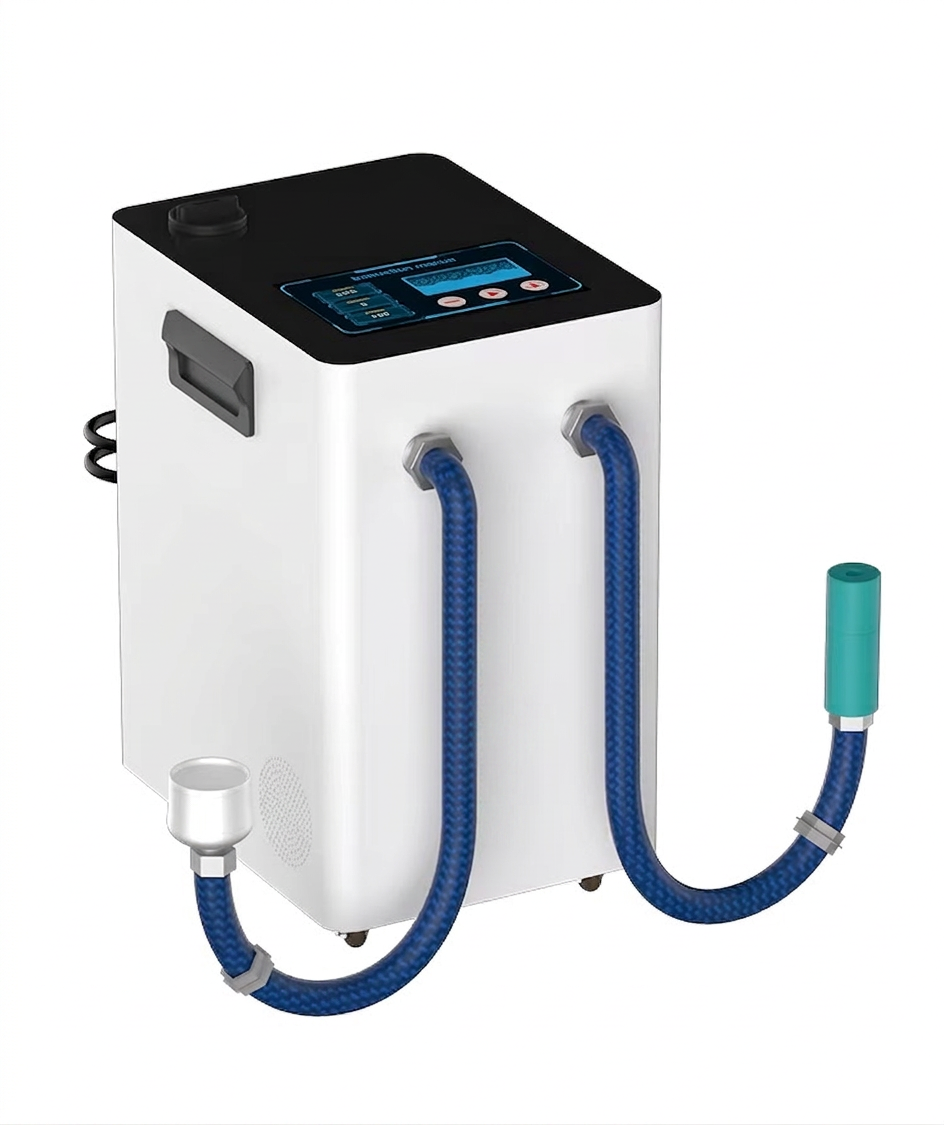
Recommended system
HERO Bath Hydrogen Nano-bubble System
PEM/SPE nano-bubble system that hydrogenates bath, spa and hot-tub water on site at 3.75 L/min, with 99.991% hydrogen purity at the membrane.
- 3.75 L/min
- >2,000 ppb H₂
- 99.991% purity
- PEM/SPE nano-bubble
Related routines and comparisons
Related hydration comparisons
Recovery and stress-reduction comparisons
Technology and evidence
How people compare these categories
- Noise is a comparison point for inhalation systems because sessions are long and often taken indoors while resting.
- Startup time is a practical comparison point: a bottle cycle, a machine warm-up and a bath fill are different waits.
- Sauna cabins are compared on heat type, cabin size and pre-heat time, so installation planning differs from a bath-based routine.
- Running cost differs by category: heating water, running a chiller and powering a panel are not comparable line items.
- Massage chair routines are typically described in terms of programme length and seating position.
- Some people compare categories by how easily a routine is maintained over months rather than weeks.
- Light-based modalities are typically applied to specific body areas in sequence.
- Equipment lifespan expectations differ and are worth checking before comparing prices.
- Some people evaluate modalities by how well they suit guests or short-term visitors.
- Hydrogenated water is described as a drinking format that spreads across the day rather than a scheduled session.
How Hydrogen Machines produces hydrogen
Hydrogen Machines uses PEM/SPE pure-water electrolysis (no chemicals, no KOH). Learn more about hydrogen bathing systems and antioxidant immersion routines.
Continue reading
Biohacking categories
Biohacking comparisons
Referenced research by category
- Photobiomodulation (red / near-infrared light) research overview — PubMed
- Pulsed electromagnetic field (PEMF) research review — PubMed
- Sauna and whole-body thermal exposure research review — PubMed
- Cold-water immersion / cold exposure research review — PubMed
- Massage and seated-ergonomics research — PubMed
- Hydrogen-rich water bathing / topical hydrogen studies — PubMed
- Molecular hydrogen as a biological signalling molecule — PubMed
Frequently asked questions
Hydrogen Machines systems are general wellness devices. They are not medical devices and are not intended to diagnose, treat, cure or prevent any disease or medical condition. Research referenced on this page is provided as general context about each category and does not describe outcomes you should expect. Consult a qualified health professional before changing any wellness routine, particularly if you are pregnant, have a cardiovascular condition, or are sensitive to heat, cold or immersion.