

Water Quality & Treatment
Dissolved gas and root-zone oxygenation in irrigation water
How dissolved oxygen, water oxygenation and dissolved hydrogen differ in an irrigation line — and where each is measured.
Two different measurements
Dissolved oxygen (DO) is measured in mg/L with an optical or galvanic probe and describes oxygen availability in the root zone or nutrient solution. Dissolved hydrogen (DH) is measured in parts per billion with a dedicated H₂ meter and describes a different gas entirely.
Aeration, air injection and oxygen dosing raise DO. A PEM/SPE hydrogen system raises DH. They are complementary measurements on the same water, not substitutes, and each requires its own instrument.
How the water is treated
Hydrogen Machines systems dissolve molecular hydrogen into water by PEM/SPE electrolysis at 99.99% hydrogen purity, producing nano-bubbles that stay in suspension longer than coarse aeration. Two capacities cover the range: 3.75 L/min for benches, propagation houses and trial blocks, and 20 L/min for production sites up to roughly ten hectares.
- PEM/SPE electrolysis — no cylinders, no chemical dosing consumables
- Nano-bubble dispersion for longer suspension in the delivery line
- Installed inline after filtration, ahead of the dripline or fertigation manifold
- Hydrogenate close to the point of use; dissolved hydrogen dissipates at the water surface
Measuring on site
Take readings at the emitter, not at the generator, and log them alongside your existing DO, EC and pH records. Dissolved hydrogen falls with distance, residence time and any open surface in the line.
Evidence and scope
Published research on hydrogen-rich irrigation water is early-stage and study-specific. We make no yield, disease, plant-health or therapeutic claims. These are general water-treatment systems; evaluate any deployment as a measured trial against your own untreated controls.
Who this page is for
growers, turf farms, golf courses, hydroponic growers, CEA managers.
Category positioning
Industrial hydrogen water systems for agriculture — on-site PEM/SPE electrolysis that dissolves 99.99%-purity molecular hydrogen into irrigation water as nano-bubbles, immediately before the drip line.
Nanobubble technology context
Hydrogen Nano-bubble Technology in Irrigation & Water Treatment
Nanobubbles are gas bubbles below roughly 200 nanometres in diameter. Because they are far smaller than the bubbles produced by a conventional aerator or venturi, they do not rise and burst at the surface: they disperse through the water column and stay in suspension for far longer, which is what growers mean by nano-bubble stability, nano-bubble retention and low nano-bubble lift. A nanobubble generator is simply the device that produces that dispersion, usually as inline nano-bubble injection on the pressurised side of a pump.
Most nanobubble equipment in horticulture dissolves oxygen or air, and some water-remediation equipment dissolves ozone. Oxygen and air nanobubbles are used for water oxygenation and root-zone oxygenation — raising dissolved oxygen in irrigation water, hydroponic nutrient solution and aquaculture ponds. Ozone nanobubbles are used for oxidative water remediation and line hygiene. All three are oxidative or neutral gases: they change the oxygen status of the water, and the accepted mechanism is gas transfer, not redox signalling.
Hydrogen nano-bubbles are the advanced modality in the same delivery format. The HERO Irrigation system uses on-site PEM/SPE electrolysis to infuse 99.99%-purity molecular hydrogen as nano-bubbles directly into the irrigation line immediately before the dripper — pump-inline dosing, no chemical inputs, no storage cylinders, and no change to the existing pipework. Molecular hydrogen is a small, neutral, highly diffusive molecule, so nano-bubble dispersion carries it through the emitter and into the root zone rather than releasing it at the surface. Where oxygen nano-bubbles act on the dissolved-oxygen budget, hydrogen acts as a selective reducing species in the water and the root zone — a different mechanism, and the reason hydrogen nano-bubble infusion is treated as the higher-specification option for irrigation, controlled-environment agriculture, turf, nurseries and vineyards. The two are compatible: hydrogen infusion does not displace an existing dissolved-oxygen programme.
Evidence framing, stated plainly. Strongest: the physical chemistry of nano-bubble formation, stability and dispersion, and the measurable hydrogen concentration delivered at the emitter (3,000–5,000 ppb on this system). Moderate: published plant-science work on hydrogen-rich water and root-zone redox behaviour, most of it small-scale or glasshouse-scale. Gaps: long-run, multi-season, crop-specific yield data across soil types and water chemistries is still limited, and site conditions vary. We publish the mechanism and the delivered concentration; we do not publish crop-performance guarantees.
Nanobubble questions
What are nanobubbles in irrigation?
Nanobubbles are gas bubbles smaller than about 200 nanometres suspended in irrigation water. Unlike aeration bubbles they do not rise and burst, so they remain dispersed through the line and pass through drippers and emitters with the water rather than venting at the surface.
How do hydrogen nano-bubbles differ from oxygen nanobubbles?
Oxygen and air nanobubbles raise dissolved oxygen — a gas-transfer effect used for water oxygenation and root-zone oxygenation. Hydrogen nano-bubbles deliver molecular hydrogen, a small neutral molecule that behaves as a selective reducing species in water. The delivery format is the same; the chemistry is not. Hydrogen infusion is complementary to, not a replacement for, a dissolved-oxygen programme.
What is the difference between micro-bubbles and nano-bubbles?
Micro-bubbles are measured in micrometres and still have enough buoyancy to rise and coalesce within minutes. Nano-bubbles are two to three orders of magnitude smaller, have negligible lift, and stay in suspension long enough to travel the length of an irrigation run.
Do nano-bubbles improve water infiltration?
Nano-bubble infusion changes the gas content and interfacial behaviour of the water rather than its bulk viscosity. Infiltration and wetting-front behaviour are reported in field and glasshouse work but depend heavily on soil type, water chemistry and irrigation scheduling, so we describe the mechanism rather than promising an infiltration figure.
Are nano-bubbles used in CEA and hydroponics?
Yes. Controlled-environment agriculture, hydroponics and vertical farming are the most common settings for nanobubble equipment, because the nutrient solution is recirculated and closely monitored. Hydrogen nano-bubble infusion is applied the same way: inline, on the pressurised side of the pump, ahead of the distribution manifold.
How stable are hydrogen nano-bubbles?
Nano-bubble stability is a function of size distribution and surface charge, not of the gas alone. Because the system infuses immediately before the emitter, retention time between injection and delivery is short by design, which is why the delivered concentration at the dripper (3,000–5,000 ppb) is the figure we specify rather than a shelf-life claim.
Can nano-bubbles be used in turf management?
Turf and golf irrigation is a standard nanobubble application, typically through the existing pressurised distribution system. Hydrogen nano-bubble injection integrates the same way, inline at the pump house, without changing sprinkler or valve hardware.
What is inline nano-bubble injection?
Inline nano-bubble injection means the generator sits within the irrigation line itself and infuses gas into the flowing water under pressure, rather than treating water in a holding tank. It is also described as pump-inline dosing, and it keeps the treated water travelling straight to the emitters.
How do nano-bubbles support root-zone conditions?
Because nano-bubbles remain dispersed rather than venting, gas reaches the root zone with the irrigation water instead of being lost in the line. Oxygen nano-bubbles act on root-zone oxygenation; hydrogen nano-bubbles introduce a reducing species into the same zone. Both are mechanisms of delivery — site response depends on crop, substrate and water chemistry.
Can nano-bubble systems be used for irrigation water treatment and remediation?
Nanobubble equipment is widely used in irrigation water treatment, aquaculture oxygenation and water remediation. The HERO Irrigation system is a hydrogen infusion device: it adds molecular hydrogen to the water and does not disinfect, filter or replace an existing water-treatment or filtration stage.
Informational content describing hardware and water-treatment mechanisms. Not agronomic advice, and no crop-performance or health claims are made.
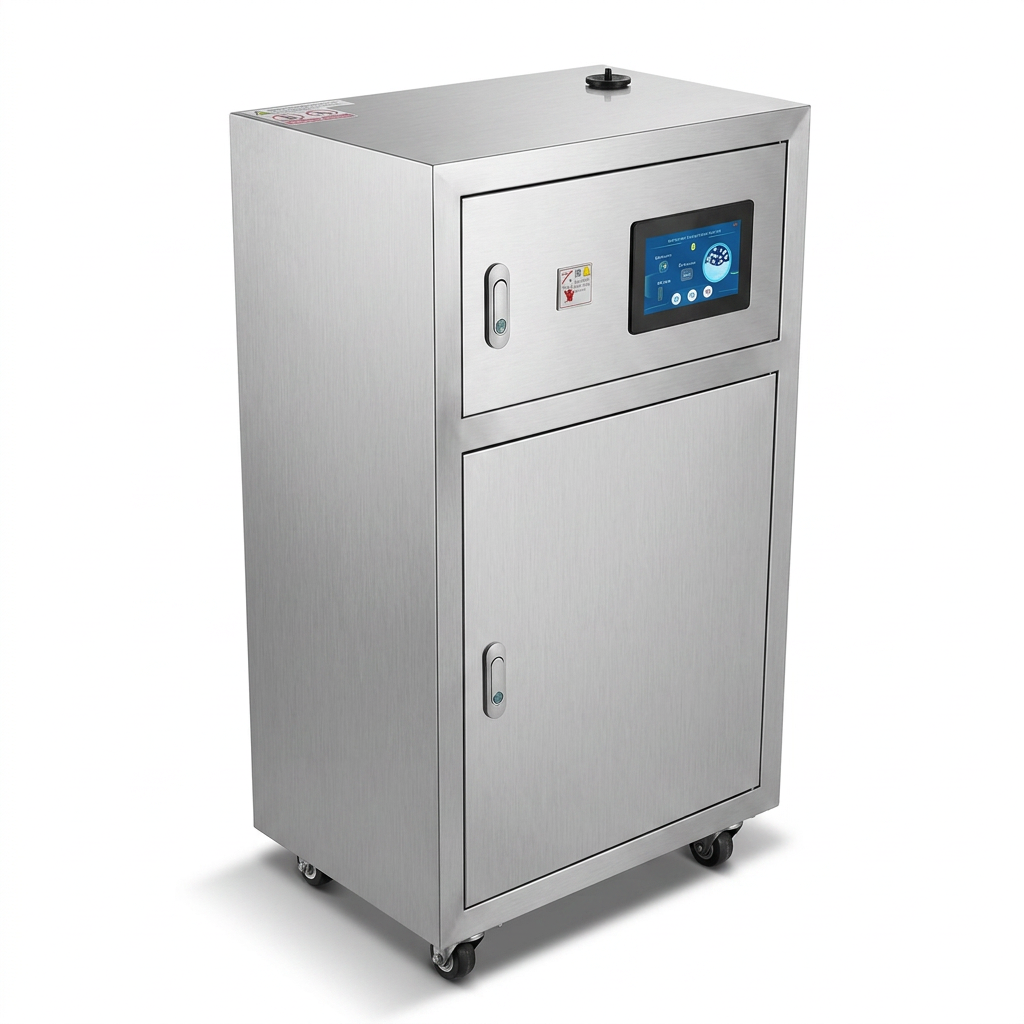
Recommended system
HERO Irrigation Hydrogen Nano-bubble System
On-site PEM/SPE electrolysis dissolves 99.99%-purity molecular hydrogen into your existing irrigation line as nano-bubbles, immediately before the dripper.
- 20 L/min
- Hydrogen nano-bubble density 3,000–5,000 ppb
- PEM/SPE nano-bubble
- Up to 10 hectares
- Nano-bubble infusion
- Inline nano-bubble injection
- Root-zone nano-bubble delivery
- Water activation process